Showing posts with label character development. Show all posts

Wednesday, March 26, 2014

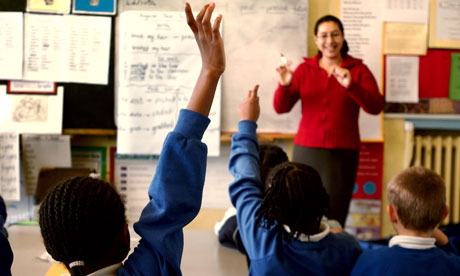
A Guide for Discussing RESPECT in the Classroom


As Corey has mentioned, conversations about respect can be complicated. We want our children to be respectful and considerate of others, but not because we have bribed, begged, or punished them. Teaching children, especially young ones, the value of respect is difficult. My advice is to tackle this subject through an open discussion in which the class decides together why respect is important to your classroom community.

Here are some questions you can use to guide your discussion and some answers you can probe for:

What is respect? What does it mean to be respectful?

-Respect is treating others the way you want to be treated.
-Being respectful means being considerate of others’ needs and feelings.

Who or what should we respect?

-We should show respect to everyone and everything. This means our classmates and teachers, but also our classroom and playground.
-We should respect ourselves.

What are some ways we can show respect in the classroom and/or at recess?

-Raise your hand and wait to be called upon before speaking.
-Put classroom supplies back where you found them.
-Follow the rules of any game being played.
-Never tease or make fun of another person.
-Dispose of garbage and recycling properly.

How will it make people feel when we are respectful towards them?

-They will feel like their feelings matter and that they have friends who care about them.
-They will think that school is a fun and safe place to be.

You can wrap up your discussion by having your students come up with a contract or pledge to be respectful that they will all sign. Whenever your students need a reminder, you can point to the agreement you all made together.

For additional resources, remember our Full of Character program has an entire session devoted to respect in the classroom!


Written by Shira Lurie, toronto lead facilitator


Image: http://static.guim.co.uk/sys-images/Guardian/Pix/pictures/2012/2/1/1328124903860/A-class-of-children-and-t-008.jpg

Wednesday, March 5, 2014

Effective Communication in Teams: Receiving Messages

In order to work cooperatively and successfully as a team, we must develop the skills to communicate effectively. While my previous article focused on tips for sending messages, this article will describe some helpful tips for receiving messages. Receiving a message skillfully is just as important as sending a message, and the way we listen and respond to a message sent by a team member can have an impact on our relationship. When we listen and respond in ways that are accurate and relevant, we communicate to our teammate that we care about what they have to say and have a desire to understand them. When we fail to listen and respond inappropriately we send the message that we don’t care about what our teammate has to say and are not interested in understanding them. Here are a few tips when receiving messages!

Tip #1: Actually Listen
Often when we are receiving messages from our teammates (either verbal or non-verbal messages, such as gestures and facial expressions), we are preoccupied with our own feelings and ideas, which may prevent us from actually receiving the intended message. When a teammate is sending an intentional message, such as sharing an idea, strategy, or a feeling they are experiencing, try to stay present and actually take in the information so you can respond accordingly.

Tip #2: Try Paraphrasing
It may feel awkward at first, because it doesn’t come naturally, but when someone communicates a message to us, try paraphrasing it back to him/her. Paraphrasing means simply restating the message in our own words. For example, if a teammate says in a group discussion “I feel like no one is listening to me”, you may reflect this back by saying “you feel like you’re not being heard in this conversation”. Paraphrasing can help ensure that you’ve understood the message, while at the same time, making the speaker feel validated and heard in his/her expression of the message.

Tip #3: Check the Meaning
After paraphrasing, or reflecting back the meaning of the message in our own words, it can be very important to check if you got it right. When you paraphrase and then ask your teammate “is that what you mean?” after they have communicated an opinion, idea, or feeling, it provides him/her with the opportunity to agree or clarify the message. Once again, this communicates to the sender of the message that we care about what they are saying and it is important to us that we understand the meaning of their message. This can increase trust in a team and suggests your desire to cooperate. 

In teams, we should constantly be focused on developing strong, meaningful relationships that are not only personally rewarding, but also help to bring us closer to our mutual goals. When we focus on receiving the messages being sent by our teammates, reflecting them back through paraphrasing, and making sure we accurately understand the meaning and intention of the messages, we are communicating to our teammates that we care about them. Therefore communicating does not only help a team achieve mutual understating, but it also helps us to strengthen our relationships.
For more information, see Johnson (2014). Keep an eye out for my follow-up article on tips for overcoming possible obstacles to communication!

Reference
Johnson, D. W. (2014). Reaching out: Interpersonal effectiveness and self-actualization (11th ed.). Upper Saddle River, NJ: Pearson.


Written by Shea Wood, M.A., CCC

Dynamix: Teambuilding for Kids and Teens, since 2002.

Picture taken from Google Images: http://www.rooseveltschoolsb.org/wp-content/uploads/2011/09/Volunteer_Jen_read1.jpg

Wednesday, October 16, 2013

Making a Difference through Empathy

How do we educate our children about essential character traits that will help guide them to make good choices?  What traits are important to foster in our children?

I was reading through this list of “amazing kids who make a difference” and was thinking to myself, what is at the heart of these children’s kindness and giving spirit? What is a trait shared by these children that contributes to their ability to make a difference in the lives of others?
I realized that it is Empathy.
Empathy is the ability to understand how someone else might feel; to put one’s self in “someone else’s shoes” and consider how another person is affected by their life circumstances and experiences. Empathy is essential. Empathy is at the foundation of qualities like kindness, respect, loyalty, and patience.
Many of the children in this list have seriously considered how someone else is feeling and, in turn, have taken action to improve the lives of others. Empathy can lead to taking initiative to help people; learning to be empathetic changes our behavior towards others. It’s important to teach kids how to be empathetic, but it’s also necessary to help kids realize that, once they understand how someone else might be feeling in a certain situation, they can actually make a difference and change those feelings through their own actions.
Children who have empathy are less likely to bully and more likely to intervene to stop bulling. It’s harder to hurt someone or standby and watch someone be hurt when we are tuning in to how they are feeling and how we would feel in a similar situation. 

It’s important to realize that empathy is a learned trait.
So, how do we teach our children to be empathetic?

1.      Don’t shush, discuss – In moments when children say or do things that could be hurtful to others, discuss the situation rather than simply telling them not to say or do those things. Discussing why their words or actions could be hurtful to others, a child can start to think about how another person might feel and how their actions contribute to those feelings.

2.      Model it  - If the adults in a child’s life model empathy, the child is far more likely to understand and acquire this trait. Talk through it and verbalize what you’re doing as you demonstrate empathy. For example, if you stop to help someone pick up coins that they have dropped while with a child, tell them afterward that you helped because the person may have been embarrassed or upset about dropping the coins, and helping that person to pick them up may have made them feel better.

3.      Praise it - Kids need to see themselves as capable of changing feelings, so when a child does something kind to another person, point it out and praise it! Make sure to be specific and mention the feelings involved. For example, “Annie looked really happy when you shared your toy with her. That was a very nice thing for you to do!”

4.      Ask questions – Asking a child to consider how someone else might be feeling is a good way to encourage empathy. Whether you are reading a story, watching tv, grocery shopping, or going for a walk, don’t be afraid to ask a kid how they think someone else might be feeling in a certain situation. For example, if you see a child being left out of a game, you could ask “how do you think this boy feels to be left out of the game?” or “how do you think it would feel to be left out of the game?”

Discussing situations where children are not being empathetic, praising children when they are, modeling empathy, and asking questions about feelings are all simple ways that we can foster the development of empathy in our children. If we are able to raise kids who have the ability to think about how someone else is feeling and in turn, treat that person with kindness and respect, we will have a whole generation of children who make a difference, in subtle and in big ways!

Written by: Shea Wood.


Dynamix: Team-Building for Kids and Teens, Since 2002.

Picture taken from Google Images: http://www.parenting.com/sites/parenting.com/files/imagecache/gallery_image/_images/201101/psy0211_koy_opener.jpg


Saturday, December 15, 2012

Game of the Month Holiday Edition - Solemn and Silent


Purpose: The purpose of this game is to integrate group members and work on self control skills.
Materials: Just the participants.
Description:
  • Members pair back to back. 
  • On the count of three, everyone must face their partner, look each other in the eyes, and then try to remain solemn and serious.  No speaking! 
  • The first to smile or laugh must sit down.
  • All who remain standing then take a new partner and the activity continues until only one person has not smiled or laughed.  (Second round of playing can involve two teams competing to outlast each other.)
  • If you get a pair at the end, who are both keeping a straight face, the rest of the group can act as hecklers to disrupt them.
Discussion/Reflection:
Good activity for breaking into activity groups.
At the end of the activity ask the group the following questions
  • Why do you think we did this activity?
  • What strategy did you have to complete this activity?
  • How did you COMMUNICATE with the group?

Friday, October 12, 2012

How Social Media increases bullying

In this New York Times article, Emily Layden tells a story about her sixth grade brother’s friend posting a status on Facebook asking them to “LIKE if you hate” Emily’s brother. Shockingly, 57 people liked the status, confirming their “hatred” for Emily’s brother. Without a doubt, it would be incredibly damaging to a child’s self-esteem and self-worth to learn that 57 kids “hate” him or her.  As an adult, I couldn't imagine how this would affect me today.  Sometimes, it seems like it truly is “social warfare” out there for today’s youth, where social media is one of the strongest weapons in any potential enemy’s arsenal.
Does the boy who started this chain of “hate” for Emily’s brother grasp the extent of the harm he has caused? Do his 57 peers understand what that simple click of the mouse truly means? Could you imagine 57 children lining up at the cafeteria to tell one child they “hate” them? This would never happen, right?  Herein lies the power of social media messages, both positive and negative.  Simply put, it is so easy to spread the word, and as a result, bullying messages are spread at lightning speed.  In the cafeteria or classroom, a responsible adult usually takes notice and steps in. Alas, in the world of social media, it is quite difficult to take notice and step in before the damage is done.
So why are children so readily spreading these hate messages through social media?  Perhaps it’s the anonymity, perhaps it seems less harmful you can’t see the victim’s reaction or maybe it’s the freedom from adult supervision in the cyber world.
The question that has been asked over and over again by parents and educators is what do we do about this?  Should we simply ban the use of social media for our children?  Unfortunately, this is nothing more than a band-aid solution.  When addressing difficult situations like this we need to ask ourselves if  our “solution”  is really designed to teach our children, or does it just  make our  lives easier by making the problem go away. We need to seize every teachable moment we can, and cyberbullying is packed with teachable moments.  Below is a list of some things you can try to both prevent cyberbullying and address if it does occur:
Parents & Educators UNITE!
Note to parents: Cyberbullying is not only the teacher’s problem to deal with
Note to educators: Cyberbullying is not only the parent’s problem to deal with
Students UNITE!
Create connected school communities offline by helping your students get to know each other, unite as a team and foster positive relationships.  Students are less likely to act like a bully when they see each other as friends.  Even more powerful is the fact that other students are less likely to laugh with the bully, participate in the bullying, or stand idly by when they see the ‘victim’ as a friend.
Hold your children accountable for their decisions:
Whether online or offline, choices must be addressed and accompanied by consequences.  Notice here that we say “choices” not necessarily “bad choices”.  A good choice, like treating each other with respect should be accompanied by a good consequence.  Similarly, bad choices, like posting a negative online status a peer, should bring a negative consequence that creates an opportunity for learning.

Wednesday, September 9, 2009

Book Launch, Join Us!!! - Character Is the Key

posted by: Mitch Zeltzer

We are very excited to invite you to a very special book launch! This Sunday, Sara Dimmerman with collaboration from Dynamix launches Character Is the Key, a must have for all parents and school libraries!!! (more info about the book seen below)

WHEN?
SUNDAY, SEPTEMBER 13 at 3 PM

WHERE?
McNally Robinson Booksellers
The Shops at Don Mills
In The Events Space, 2nd Floor
Don Mills Road & Lawrence Avenue East
12 Marie Labatte Road
Toronto, Ontario
M3C 3R6


Character Is the Key
How to Unlock the Best in Our Children and Ourselves

by Sara Dimerman
with collaboration from Dynamix
(Wiley & Sons on shelves August, 2009)

Character Is the Key is a book on how parents can model character for their children. Dynamix, in collaboration with the author, created family challenges and exercises to help families come together so that they can enact and fully understand the ten crucial character attributes.


I hope to see you there!

Wednesday, June 3, 2009

Camp Day at Tim Horton's!

Posted by Adam Kertesz

On a personal note, today is my single favourite fund raising day of the year. It's Tim Horton's Camp Day. For those unfamiliar with it, here's a little description of this awesome day, taken off their website:

What One Cup of Coffee Can Do

Every time a customer buys a coffee at Tim Hortons on Camp Day they will help send close to 14,000 kids - who could otherwise not afford it - on the camping adventure of a lifetime. All children who attend one of the Foundation's six camps are selected from within the communities where Tim Hortons stores are located. Tim Hortons Store Owners work closely with local youth organizations and schools to select children, between the ages of nine and 12, to attend a 10-day summer camp session or seven day winter camp session.

"By purchasing a coffee on Camp Day, our customers give kids, who live in their very own community, an opportunity to experience a camping adventure that will inspire them for years to come," says Bill Moir, President, Tim Horton Children's Foundation. "Together we can continue to foster within thousands of children the quest for a brighter future."


--
I attended some form of camp (first day camp, then overnight camp) from the age of 6 all the way until I was 24 years old, so you could imagine how close to home this type of initiative is for me. Camp is a truly remarkable experience that without question played the biggest role for me personally in shaping who I am today. Where else do children get the opportunity to play every day with kids their age, and have daily access to such awesome activities like waterskiing, sailing, canoeing, kayaking, arts and crafts, horseback riding, archery, dance, basketball, soccer, baseball, and hockey (just to name a few!) Some of my closest friends today are friends that I met at camp. It is a place where incredible growth can take for every child that attends, and it is where children can best learn to be independent- a key building block in the character development of a child.

Today is the day where simply buying a coffee can help send kids to camp who otherwise might never have attended. Please take some time out of your day and buy yourself (or the guy behind you!) a coffee. You will be changing a child's life.