Showing posts with label positive. Show all posts

Wednesday, December 4, 2013

R- E - S - P - E - C - T

Respect – An age old term parents and educators beg of children with exhaustive repetition. If only children were respectful, we probably wouldn't need rules. If children were respectful, they would walk in the hallways, be considerate of one another, keep their hands to themselves, listen when spoken to. In fact, if kids were respectful, every decision they make would be in consideration of their peers, adults and environment.

So, how do we get children to just be respectful? Let’s first consider the hours in a day trying to get children to behave the way we expect them to. It often involves bribery, arguments, debates, threats, negotiations and punishments. By doing this, are we, in fact, teaching children how to be respectful? Or are we simply controlling their behaviour and actions? Is a child respectful when they do something nice for someone to avoid punishment? The simplest and most effective way to teach respect is to be respectful. All too often, the very behavior we expect our children not to engage in is the behavior we use to control them. Yelling at a child is only effective if we expect our children to do the same. 

Consider your relationship with a police officer. If an officer stops you for rolling through a stop sign at a snail’s pace and then berates you for the infraction, how would you feel toward the officer? Would you feel respected? Would you feel you deserved to be berated? Now, imagine this happened on a regular basis. Imagine the frustration and sense of hopelessness you would feel in the presence of the very people you thought were there to help and protect you. Now, imagine you are to the kids what the officer is to you.


My grade 9 teacher epitomized what it means to teach respect. He was the only teacher who did not require students to ask permission to go to the washroom. Sounds crazy? Not only did we not require permission, we did not take advantage of his lenient class management style. We would go one at a time and return promptly. So, what was the secret? It’s simple. Respect. He modeled the behavior he expected from us. By respecting us – we, in turn, respected him. And by respecting him, we learned to respect others. So, with all the tricks in the bag, the foremost method of raising respectful and considerate children is by modelling the behaviour. Speak like you would like to be spoken to, when you say no to a child, provide a fair reason and remember to make sure they always know how much you care.

Written by: Corey Szwarcok, Dynamix Co-founder.


Dynamix: Team-building for Kids and Teens, since 2002.

Picture taken from Google Images, source: https://blogger.googleusercontent.com/img/b/R29vZ2xl/AVvXsEighjyhsuS6K81zUtjoG6LIx8XgQHCchvj7EZ0N8i-DAgTAkwuWLz9iwGhoUFAehYDw6g3f4nPu1NDlMpdIaawblxHaoY2Gu4sqOIyMyzCjsaXdRsHBf25P4ujwkDd0cqPaRNTNON8sPGjH/s320/parents.jpg

Wednesday, November 27, 2013

3 SIMPLE RULES: THE POWER OF POSITIVE IMPACT


Whether parenting or working with a large group of students, it is important we look at our own behaviour and the impact it has on our children’s actions. Although we may have the best of intentions, we inadvertently influence our children’s poor behaviour or negative choices. When dealing with a child who is misbehaving, it is easy to blame their environment, parents, friends or even nature. But by doing so, we are relinquishing all responsibility thus disabling us from making a difference. By owning the behaviour we are looking in a mirror and asking “What can I do to change the behaviour?”. Let’s look at 3 simple rules I like to remember when
working with children.

The first rule is “Set children up to succeed”. Imagine asking a child not to jump while standing on a trampoline or sit a group of children at a table for long period of time and ask them not to talk. Although children do have to learn to follow rules and “respect their elders”, they do have limits. Evaluating the likelihood of success before acting will create a more positive environment and prevent negative behaviour. By helping children to succeed, they learn success is possible and experience the intrinsic benefits which will leave them wanting more.

The second rule is “Be positive”. It may sound simple and perhaps obvious, but all too often we focus too much on negative behaviour rather than positive behaviour. Speaking negatively toward a child or

labeling a child will encourage the behaviour. Similarly, focusing on positive behaviour will encourage the behaviour to continue.

The third and final rule is “Connect with the child”. A relationship built on control will likely not give you

the results you seek. Nobody likes to be forced to do something. Have you ever tried to strap a child into a
car seat against their will? Connect with a child, build trust and respect and they will be willing to learn. By owning the behaviour we have the power to change the behaviour. Although it’s not easy, it’s amazing what we are capable of achieving. What are your rules?


Dynamix: Team-building for Kids and Teens, since 2002.

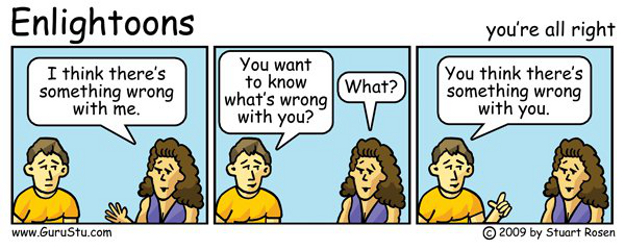
Picture taken from Google Images, source: http://www.a-spiritual-journey-of-healing.com/images/whats_wrong_with_me_stuart_rosen.jpg

Wednesday, September 25, 2013

A POSITIVE TRANSITION TO HIGH SCHOOL

The transition from elementary to high school can be an overwhelming experience. Children spend years learning how to get along in elementary school to be swiftly taken out of their safe haven and tossed into
unfamiliar territory. The unknown coupled with the myths about high school are sure to raise concern and, in some cases, anxiety.


High school should be a time for learning, growing, meeting friends and creating memories that will last a life-time. Students should not feel isolated, unwelcome or fearful. With the right support and tools, students can embrace the transition and not fear it. It is important for students to share their feelings, expectations and concerns with other students. Knowing that they are not alone creates a great sense of relief. Another key component to a successful transition is learning the necessary soft skills that will:
A) empower them,
B) enable them to deal with unpredictable situations, and
C) teach them how to get along and co-exist with others.

Some examples include conflict resolution, communication and good decision making. School is a time to learn about math, science and geography but the precursor to academic success and most other success is confidence, positive values and solid interpersonal skills. Give your children these tools and watch them grow!

Written by: Corey Szwarcok, Dynamix Co-founder.


Dynamix: Team-building for Kids and Teens, since 2002.

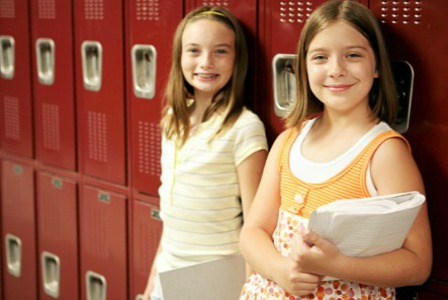
Picture taken from Google Images, source: http://cdn.sheknows.com/articles/2012/08/junior-high-school.jpg